
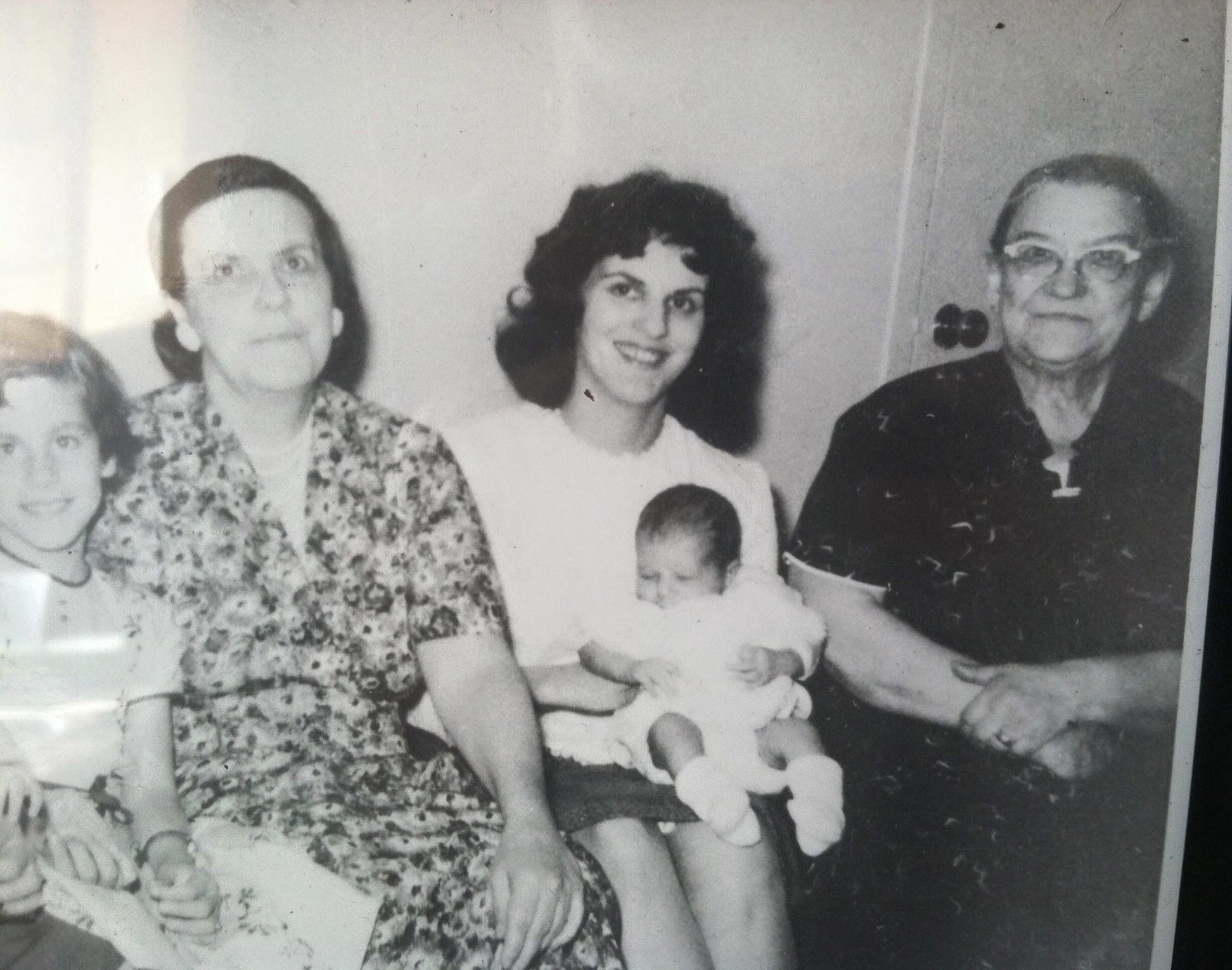
Both my parents were born and grew up in what was once a mid-sized mountain town in the Pennsylvania portion of the Appalachian mountains. My grandparents were all born there too. Their grandparents were immigrants who came through Ellis Island between the 1880s and early 1900s with exception of my mother’s maternal grandmother. That branch of the family traveled back and forth several times between Italy and America for a while and Nonie was born during one of periods they were in America. Of seven siblings she was the only one born on this side of the Atlantic.
In its heyday Mt. Carmel was a thriving town known for its many churches built by the various immigrant groups. It was a town of steeples with church bells always ringing out into the mountain air. Mom’s family belonged to St. Peter’s Catholic Church and my dad’s family belonged to Our Mother of Consolation, known to all as MOC. The main industry had once been coal mining. By the time I visited there in early childhood, the mines were closed, but the air still carried the scent of sulfur.
The year I was born, an underground fire started and smoke started coming out of the ground in the nearby town of Centralia (https://en.wikipedia.org/wiki/Centralia_mine_fire) and is still burning to this day. Centralia had to be evacuated. It’s an interesting place to visit if you’re ever in the area. Another great family-oriented destination in that area is Knoebels, a family-owned old-fashioned amusement park –https://knoebels.com/. You can camp right next to the park.
In my early years I became familiar with the five-hour trip from Silver Spring Maryland to Mt. Carmel: the smokestacks of Baltimore, then pastures full of cows, then narrow roads through the mountains with sheer granite on either side. We would travel there to visit our grandparents and other relatives several times a year, smushed into the car —first in a 1961 Simca, a tiny car that Dad told me he bought by personally bringing the car dealer a certain amount of money each paycheck, and then a 1970 Dodge Coronet, a major upgrade that had dark green leather seats and felt like a major upgrade.
In my early years I became familiar with the five-hour trip from Silver Spring Maryland to Mt. Carmel: the smokestacks of Baltimore, then pastures full of cows, then narrow roads through the mountains with sheer granite on either side. We would travel there to visit our grandparents and other relatives several times a year, smushed into the car —first in a 1961 Simca, a tiny car that Dad told me he bought by personally bringing the car dealer a certain amount of money each paycheck, and then a 1970 Dodge Coronet, a major upgrade that had dark green leather seats and felt like a major upgrade.
Those trips are among my favorite memories. I remember it as a funky little town of tall narrow townhouses on steep narrow hilly streets. It had a main business area they called “uptown” with Woolworths, a candy shop, and a diner with yummy pizza. Everyone seemed to know us.
At Mom’s parents’ house it smelled like cigars and whatever was cooking in the large kitchen—spaghetti, a casserole, a cake. At Dad’s parents, it also smelled like yummy food—perhaps cabbage rolls and sausage– and Grammie always had a treat waiting for us, usually a small toy or a coloring book. Gramps was sick and didn’t say much. He died when I was six. The cause, I was told, was black lung.
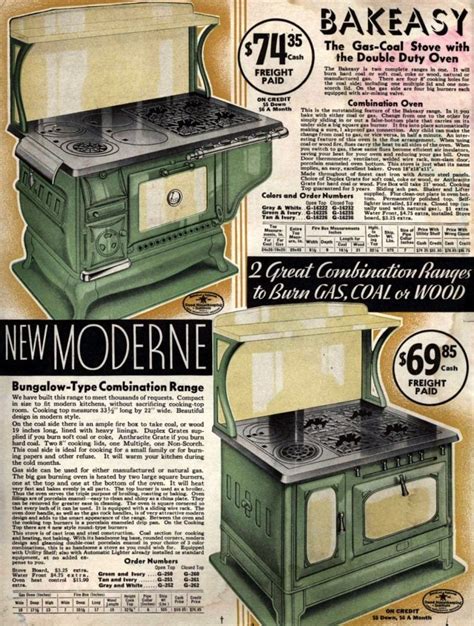
Both kitchens had a coal stove, and both tables were white enamel with colorful tablecloths or place cloths. At my maternal grandparents there was a pair of cookie jars that looked like roly-poly Dutch children. I think those cookie jars are now worth a fortune on eBay… I still aspire to that cozy 1930s look for my own kitchen (even though by then it was the 1960s).
I tell you this because although I was was born in Washington DC and raised in the Maryland ‘burbs, my parents still had one foot in small town Pennsylvania. Two different sorts of worlds. I never loved the DC area, even as a small child, and perhaps it’s because I knew there were other places I liked better.
Once, as a young adult, when I was feeling very ungrounded and alienated, I told Mom I wished we had grown up in Mt. Carmel, where I would have had roots and and a sense of place. She told me I would have hated it. “It was like living in a fishbowl,” she said. “I couldn’t wait to get out of there.”
At 21 she married my Dad who was fresh out of the Coast Guard, and they moved to Washington DC. I don’t know much about their early married life except they both got jobs and Dad went to night school. Mom told me she went back to work for a short time after I was born and left me with a babysitter but later stayed home. Mom absolutely loved the DC area. It became her chosen home.
I have a theory that we all resonate with a certain place or type of place and that place is not always the place we called home as a child. For me, my heart sings in the Appalachian Mountains of Virginia, where I now live, but I think a small mountain town in Pennsylvania would have had the same effect.
After I was born, they got an apartment on the second floor of a house in Tacoma Park Maryland and had two more children. In 1966 we moved to Silver Spring to a Cape Cod with a big yard. It seemed huge at the time, but when I looked it up on Zillow recently, found out it was only 1200 square feet. In 1968 my youngest sister was born during the riots that happened after MLK was killed. The hospital is in downtown DC and the streets were in chaos. My Dad somehow ended up getting a police escort when he rolled down the window and yelled his wife was in labor. My Dad did have a voice like a foghorn.
At six I began first grade at St. Bernadette Catholic School. I wore a blue uniform – a jumper with a white Peter Pan collar blouse and a beanie-style hat. By second grade they discontinued the beanie. It was the late 1960s and things were changing fast. My next-door neighbors and many kids in the neighborhood went to Catholic School. I know few kids who went to public school, but I thought the normal thing was to be Catholic.
St. B’s was a strict traditional school connected with a parish church. Teachers were both nuns and lay teachers with visits from the priests on special occasions. The girls and boys had separate recess areas and separate roles. Boys could be alter boys. Girls could help in the convent. Both roles were special honors.
We sat at little cast iron and wood school desks arranged in straight rows. You got in trouble to talking in class. You had to raise your hand and stand up nest to your desk before speaking. You had to say “Yes Sister” and “No sister.” We stood, did the sign of the cross and prayed a series of prayers and then said the Pledge of Allegiance at the start of each day.
We were required to write with pencils or fountain pens. Ball point pens were strictly forbidden. I’m not sure of the rationale for the ball point prohibition but I think it had something to do with the danger of damaging the wooden desktops. And desktop meant the actual surface of your desk. A laptop was where you sat with grandma.
But even then, that traditionalism was on its way out. In the carpool on the way to my very traditional school, I saw hippies in ragged bell bottoms hitchhiking along the side of the road. Rock and roll was on the radio. The hats we used to wear to church in my pre-school days were already gone. No more black lace veils for Mom either. We girls had not quite gotten to the point of wearing pants instead of dresses to church, but that change was right around the corner.
Even as a kid, I understood that money was tight. It always seemed to be a source of stress in the house. We only had one car, so if Mom needed to go somewhere she had to drive Dad to work and pick him up. The tuition at St. B’s when I started was $100 a year, but that was per family, whether you had one kid or eight. (Most of the kids had large families.) The $100 was a strain on the budget. Other than my uniform, all my clothes were hand-me-downs from cousins. But we always had plenty of food and the table and was constantly told that I didn’t know how lucky I was.
And it was true. I didn’t. What kid inundated with TV advertising and seeing people who are wealthier and have two cars all around them knows that they are lucky? You know in a vague way that people live in poverty and there is suffering, but in a world without internet and three channels on TV about happy well-dressed people, you feel what you see and experience. Books can give you an idea of other types of lives—and eventually they did—but many of the children’s novels I read were also about people wealthier and happier than I was.
One of my hard-earned life lessons, essential to my creative life as well as all other aspects of life, is this: Avoid comparison. I tape it my bathroom mirror. We are responsible for our own progress and should compete only against our own standards. You can hold yourself to God’s standard if you like, because you know that is a standard none of us can ever meet for all eternity.
When you aspire to God’s standard, at least you are bypassing all lesser flawed standards. What you are really saying is you will do the utmost you can do in your current circumstances with the resources and abilities you have in the moment. But don’t hold yourself to the standards of your neighbors, classmates, co-workers, celebrities, art world superstars, athletes, social media influencers, or any other mere human with the exception of the one you are in charge of: yourself.
 Scribbleflowers Journal